The AI Hub Weekly: Anthropic’s Powerful AI Models Are Now Unleashed Worldwide
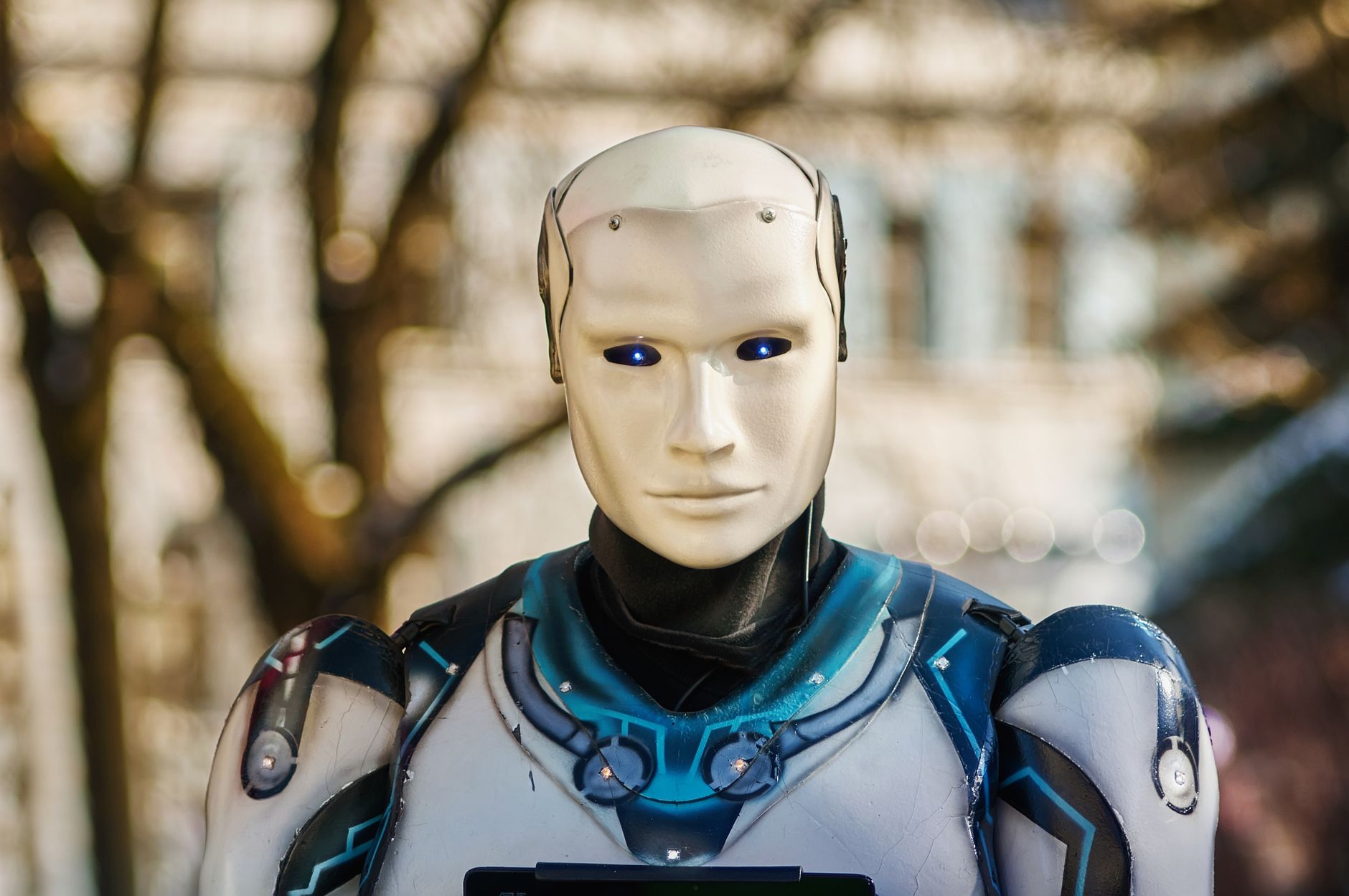
This was a week when AI took several leaps forward, both in what’s possible and what’s available. Global barriers came down for major new models, and an avalanche of fresh data shows how tools like ChatGPT are now woven into daily life worldwide. The march of AI isn’t just abstract — the real, practical boundaries of what we can do and who can do it just shifted.
TOP STORIES
ChatGPT Use Now Truly Global and More Versatile, OpenAI Data Shows
- OpenAI released its first “Signals” report, revealing how ChatGPT adoption is broadening and deepening across the world.
- More people in more countries now use ChatGPT for a wider range of everyday and work tasks; usage is becoming more diverse by country and occupation.
- Data is based on aggregated analysis of individual ChatGPT plans, offering a rare look at how this AI is actually used.
- Source
Anthropic’s Latest AI Models Are Now Available Worldwide After U.S. Export Ban Ends
- The U.S. lifted export restrictions on Anthropic’s most advanced models, Claude Fable 5 and Mythos 5, following months of scrutiny over national security risks.
- Both models are again available internationally (Fable 5 as of now; Mythos 5 for U.S. users since June 26).
- This means global businesses, researchers, and individuals can now access some of the most powerful public AI systems, after a period of abrupt lockdown.
- Source
Benchmark Shows AI Agents Can Now Modernize Real-World “Enterprise” Codebases
- IBM Research and Hugging Face announced ScarfBench, a test suite focused on whether coding AIs can upgrade big, old Java business software to modern frameworks.
- Early results: state-of-the-art agents can already handle real migration tasks with minimal supervision, not just toy datasets.
- This could save businesses huge amounts on expensive, tedious software work — but raises questions about job displacement and code safety.
- Source
Anthropic Launches “Claude Science” to Tackle Scientific Research Tasks with AI
- Anthropic unveiled Claude Science, an AI assistant designed to help researchers and biotech professionals with scientific discovery and data analysis.
- Like their Claude Code product (geared at software), Claude Science is meant to run complex scientific workflows and even autonomously plan research.
- It’s pitched as a dramatic productivity booster for labs, but is currently in limited release to select partners.
- Source
Open Source “Gap Map” Attempts to Catalog Every Available AI Tool
- A nonprofit launched the “Open Source AI Gap Map,” indexing 421 open-source AI models and tools to clarify what’s really available outside Big Tech.
- The project aims to offer a clear, public overview for anyone who wants alternatives to commercial models or wants to contribute to open AI.
- Gaining traction among researchers, but ordinary users can now also browse it to discover new free AI products.
- Source
Most of a New App Was Written by Anthropic’s AI, Costing Under $150
- “sqlite-utils” 4.0rc2, a real-world development tool, was largely written by Anthropic’s Claude Fable 5, with direct costs of about $149.
- The project lead described relying heavily on the AI to handle bug fixes, incorporate feedback, and ensure a reliable release.
- Demonstrates how AI-generated software isn’t just theoretical: it’s now used for public releases at a fraction of traditional costs.
- Source
THIS WEEK IN AI
This week’s headlines don’t just suggest that AI is everywhere — they show that its role in our daily and working lives has reached a tipping point. For years, we heard endless talk about “AI transformation.” Now, saturated usage data, open benchmarks, and abrupt regulatory U-turns all point to the same reality: the debate is over, and the world is already racing ahead.
OpenAI’s Signals report feels like a coming-of-age moment. It’s easy to forget how recent ChatGPT’s debut actually was. Now we have hard data showing it’s not just an English-speaking, tech-sector phenomenon: teachers, doctors, office workers, and students in dozens of countries are building ChatGPT into their routines. It’s quietly becoming as normal as Google or email. That should thrill us — and make us a little uneasy. How much of our critical thinking is quietly being delegated?
Meanwhile, the trade war over powerful AI models like Claude Fable and Mythos 5 shows how nearly everyone, from governments to indie programmers, recognizes these tools as real levers of power. When a single export ban can meaningfully freeze global R&D or rewrite business plans, we’ve crossed from “AI as hype” to “AI as critical infrastructure.” The fact that the ban lasted only a few weeks says a lot about the pressure to keep the AI arms race open—both for commerce and for national influence.
The benchmark results on AI-powered code migration might seem niche, but the real story is a glimpse of what the next wave of automation can target. It’s no longer just grammar checks or draft emails. We’re on the brink of AI refactoring sprawling business systems, planning scientific experiments, and shipping hundreds of lines of production software for less than a nice dinner out. Yes, that changes what’s possible for small teams and lone creators — but it also highlights how entire professions may be tipped on their side.
So what should we do with this moment? If you’ve been a cautious onlooker, this is a good time to peek at the new open-source Gap Map and actually try something new. If you’re a power user, ask harder questions: who, exactly, is at the steering wheel of this transformation? Is it the same handful of mega-corps? Or has open culture found new momentum? And if your job or daily tasks haven’t been touched by AI yet — take a breath. The data says you’re now in the minority.
What’s the most surprising way you could use AI next week? What’s stopping you from trying?
MORE TOP STORIES
White House Confirms Export Controls on Anthropic’s Claude Models Are Officially Over
- Anthropic announced it received formal notice from the U.S. Department of Commerce that export bans on its Claude Fable 5 and Mythos 5 models have ended.
- The company is restoring access for international users effective immediately and promises further updates.
- The stakes: These restrictions had blocked many businesses and developers outside the U.S. from using its top models.
- Source
Anthropic Releases “Claude Sonnet 5,” Offering Top-Tier AI at Lower Prices
- Anthropic rolled out Claude Sonnet 5, claiming performance nearly equal to its flagship Opus model but at a much lower cost.
- The new model comes with an in-depth technical “system card” detailing safety improvements and cost efficiency.
- Early testers report Sonnet 5 is now competitive for a wide range of business and productivity uses.
- Source
U.S. Government Eyes 5% Ownership Stake in OpenAI
- Reports emerged that OpenAI CEO Sam Altman is in talks with the Trump administration about the U.S. government taking a 5% financial stake in the company.
- Altman frames it as a way to “share the upside of AI” with the public; Trump supports the idea, but rival politicians want a much bigger stake.
- If agreed, this would mark a historic shift in public-private AI ownership — but is still in early negotiations.
- Source
Can Cursor Stay a Neutral Coding AI Tool After Its $60 Billion Acquisition by SpaceX?
- SpaceX’s high-profile acquisition of Cursor—the popular AI coding platform—raised questions about whether it can remain an “open” platform, especially for rival AI models.
- Cursor now has access to huge computing resources but faces pressure to prioritize SpaceX or Elon Musk’s in-house models over competitors like OpenAI or Anthropic.
- For developers, this could affect the flexibility and choice of underlying AI in their most-used coding assistant.
- Source
AI Exploit: Claude AI Model Helped a Researcher Hack US Festival Ticketing Systems
- Security researcher described how Anthropic’s AI model, Claude, enabled him to discover a flaw that could generate VIP tickets to nearly every major U.S. music festival.
- The incident highlights both the creative utility and severe risk of highly capable AI in security-sensitive contexts.
- Raises urgent questions about digital permissions, ethics, and what AI platforms should (or shouldn’t) allow.
- Source
U.S. Lifts Export Controls on Anthropic’s Mythos and Fable AI Models
- The U.S. Commerce Department officially released a letter to Anthropic confirming export restrictions on its advanced AI models are over.
- The decision comes after a multi-week standoff related to national security and competitive threats.
- Global customers and developers now have renewed access to Anthropic’s leading-edge AI systems.
- Source
ALSO THIS WEEK
- sqlite-utils 4.0rc3 — Ongoing development with heavy AI collaboration; new release candidate using Fable and GPT-5.5 for improvements. (Source)
- Better Models: Worse Tools — Report on how newer Claude models, while smarter, sometimes produce unpredictable tool usage in production. (Source)
- Quoting Josh W. Comeau — Insights from a course creator about changing trends in online education, potentially shaped by new AI learning tools. (Source)
- Fable’s judgement — Lessons learned from expert users on how to lean on AI assessment and reasoning in code review. (Source)
- June 2026 newsletter — Recap of major AI product launches and changes last month, for sponsors-only audience. (Source)
- llm-coding-agent 0.1a0 — Experiment building a simple coding agent using Fable 5, part of a broader move toward agentic AI coding. (Source)
- Using DSPy to evaluate and improve Datasette Agent’s SQL system prompts — Practical guide for refining prompts for AI data analysis agents. (Source)
- Understand to participate — Reflections from an AI conference on how deeper understanding leads to better collaboration with AI. (Source)
- Nano Banana 2 Lite — Google’s Gemini 3.1 “Flash Lite Image” model, aiming to be the fastest and cheapest for image tasks. (Source)
- The AI Compass — Interactive quiz to help users discover their preferences and comfort zones with AI systems. (Source)
- Have your agent record video demos of its work with shot-scraper video — New tool allows autonomous agents to create step-by-step video demos; launched in shot-scraper 1.10. (Source)
- Ornith-1.0: Self-Scaffolding LLMs for Agentic Coding — New open-source model focused on large-scale, autonomous code generation. (Source)
- LLMs are stuck in a groupthink groove. This startup is trying to get them out. — Startup attempts to reduce predictable, repetitive AI responses. (Source)
- AI agents are not your “coworkers” — Report questions the wisdom of marketing AI agents as literal team members in the workplace. (Source)
- Meta Contractors Posed as Teens to Prompt Rival Chatbots About Suicide, Sex, and Drugs — Meta’s external testers acted as minors to probe how competitor AIs handle sensitive topics. (Source)
Want this in your inbox every Monday?
Talk to AI Tech Helper